
Planting a Windbreak for an Exposed Garden
Why trees fail in storms — and how to spot the warning signs
If you’ve ever watched a mature oak bend in a gale, you’ll know that trees are built to sway. Their wood is flexible, their roots grip the soil, and their branches shed wind by twisting and flexing. Yet storms still bring them down. The reasons are rarely random: most failures start with a weakness that has been developing for years. Saturated ground, a sudden gust from an unusual direction, or a sail-like crown can turn a minor defect into a major hazard. As a tree owner, your job is not to eliminate every risk — that would mean felling everything — but to recognise the warning signs early. Look for deadwood in the canopy, cracks in the trunk or main limbs, and fungal fruiting bodies such as brackets or honeycomb-like growths near the base. Two stems that meet in a tight V-shape, known as included bark, are a classic weak point. So too are cavities, bleeding lesions, and soil heaving around the root plate after wet weather. A little observation now can save a lot of heartache later.
A pre-storm inspection walk for your garden or woodland
Before the autumn and winter gales arrive, take a slow walk around your trees. This isn’t about frantic pruning — it’s about noticing what’s changed since last year. Start with the big picture: has the tree begun to lean? Are there new bare patches in the canopy? Then move closer. Use binoculars if you have them, and check for the following:
- Hanging or broken branches — even small ones can become projectiles in high winds.
- Crossing and rubbing branches — these create wounds that let decay in.
- Included bark — where two stems press together, forming a weak union.
- Fungal brackets — especially at the base or along the trunk; they often signal internal decay.
- Soil cracks or heaving — a sign the root plate is moving.
- Dead stubs and old pruning cuts — if they haven’t sealed over, water can pool and rot spread.
Write down what you find. If you spot several defects on one tree, or any defect on a large, mature specimen, that’s your cue to call a professional arboriculturist. They can assess the tree’s structure and recommend whether to prune, cable, or monitor it.
Pruning for wind resistance — the right way
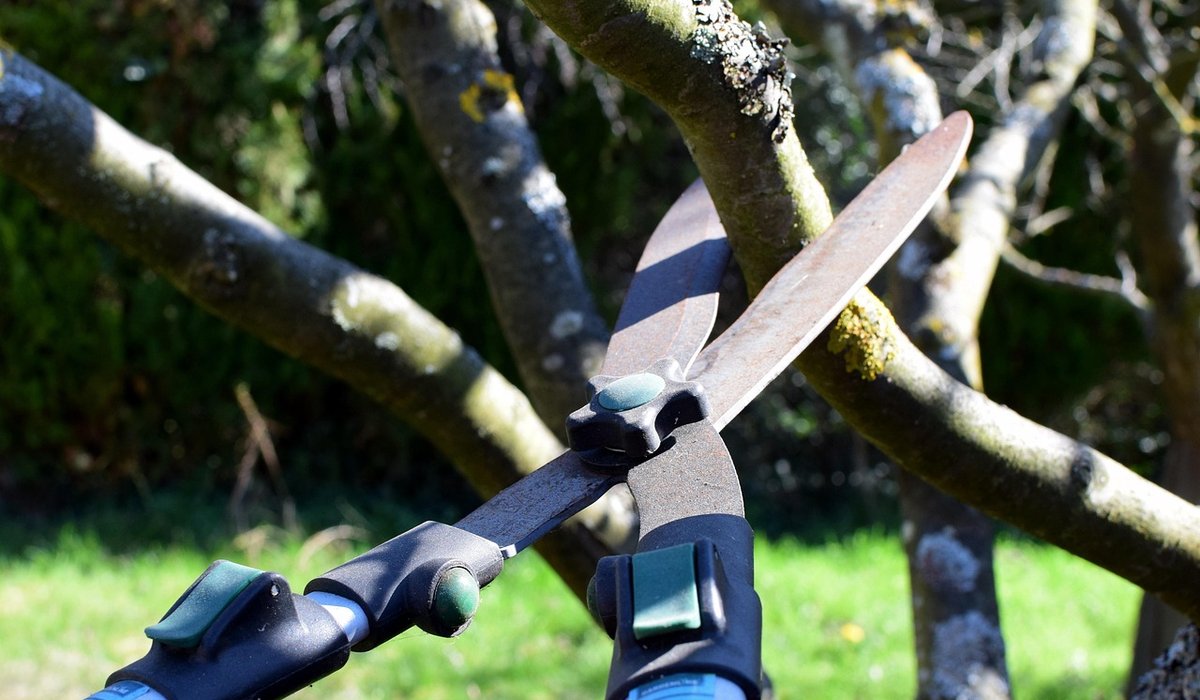
Many people think that cutting a tree back hard makes it safer. In truth, over-pruning is one of the worst things you can do. It removes the leaves that produce energy, stresses the tree, and encourages weak regrowth. The goal instead is to reduce the sail area while preserving the tree’s natural shape. This is called crown thinning, and it should remove no more than 10–15% of the live foliage in one go. Focus on dead, dying, or rubbing branches first. Then thin out dense areas where wind can’t pass through. Never “top” a tree — that creates ugly, weakly attached shoots that snap easily. Also avoid lion-tailing, where you strip all the inner branches and leave a tuft at the end; this shifts weight to the ends of limbs and makes them more likely to break. The best time to prune is late summer or during the dormant season, but emergency work can be done anytime. If you’re unsure, hire a qualified arboriculturist — they’ll climb safely and make clean cuts that the tree can seal.
Staking and supporting young trees correctly
Young trees are vulnerable because their roots haven’t yet anchored them, and their trunks are flexible. But staking is a balancing act. Stake too rigidly and the trunk won’t develop the strength to stand alone. The aim is to hold the root ball steady while allowing the trunk to sway. Use two or three stakes driven into undisturbed soil, placed outside the root ball. Attach them with flexible ties — old bicycle inner tubes or purpose-made webbing — in a figure-of-eight loop that allows movement. Check ties every few months for rubbing or tightness. Remove stakes after 18 months to two years, once the tree can hold itself. While you’re at it, water young trees deeply during dry spells — around 50 litres per week for a newly planted specimen — and mulch with a 5–7 cm layer of bark or compost, keeping it clear of the trunk. Good aftercare prevents the weak root systems that storms exploit.
After the storm: immediate steps and professional inspections
Once the wind drops, resist the urge to grab a saw and start hacking. Safety first: stay clear of any tree that is touching or near power lines, and never work under a leaning tree or one with hanging branches. If a branch is broken but still attached, it may be under tension and can spring back violently. For anything larger than a wrist-thick branch, call a professional. They have the training and equipment to deal with storm damage safely. After the immediate clean-up, arrange a thorough inspection. Some damage — cracked forks, root damage, or internal decay — isn’t obvious from the ground. An arboriculturist can use a sounding mallet, a probe, or even a resistograph to check for hidden problems. For mature trees, a professional inspection every one to three years is sensible, and always after a severe storm. Their report will tell you whether a tree can be saved with remedial pruning or must be removed.
Building long-term resilience in gardens and woodlands
The best storm protection is a healthy, well-structured tree. That starts with choosing the right species for your soil and exposure. Native oaks, beech, hornbeam, and field maple are generally robust, but even they need space. Plant a diverse mix so that if one species suffers, others thrive. Avoid soil compaction around roots — don’t park cars or store materials under the canopy. Keep grass short or use a mulch ring to reduce competition. For woodland gardens, thin crowded stands so that remaining trees develop strong, tapered trunks and deep root systems. And don’t forget the value of regular professional advice. A brief inspection every few years costs far less than emergency removals or damage to property. With a little foresight, you can enjoy your trees for decades, knowing they’re better prepared for whatever the British weather throws at them.
LEAVE A COMMENT